


How to Choose an Accent Wall: Tips, Rules & Color Guidance
Accent walls offer a distinctive method of unifying a home's color scheme, adding subtle depth to walls, or creating striking centerpieces that welcome guests. Although versatile, finding the ideal balance and spot for an accent wall can be challenging. 360° Painting is here to help you with valuable tips for painting the perfect accent wall.
To leave the painting of your accent walls to the pros, find your nearest 360 Painting location today and get a free consultation and estimate!
How Do You Choose Which Wall Should Be the Accent Wall?
The best accent wall is typically the first wall you see when entering a room, or the wall that already serves as a natural focal point, such as the wall behind a sofa, bed, or fireplace. Avoid choosing a wall that's broken up by multiple doors or windows, as this makes it harder to create a cohesive effect.
DO: Accent walls are perfect for open, brightly lit spaces where you want to feel connected and cozy. Open floor plans, tall ceilings, and rooms with nooks (small, contoured spaces) are the perfect canvases for accent walls.
DON’T: However subtle the color, accent walls are still noticeable. So avoid putting an accent wall in a small, enclosed space. Additionally, avoid accent walls in rooms with little natural light. In these situations, an accent wall will break up the room and make it feel small.
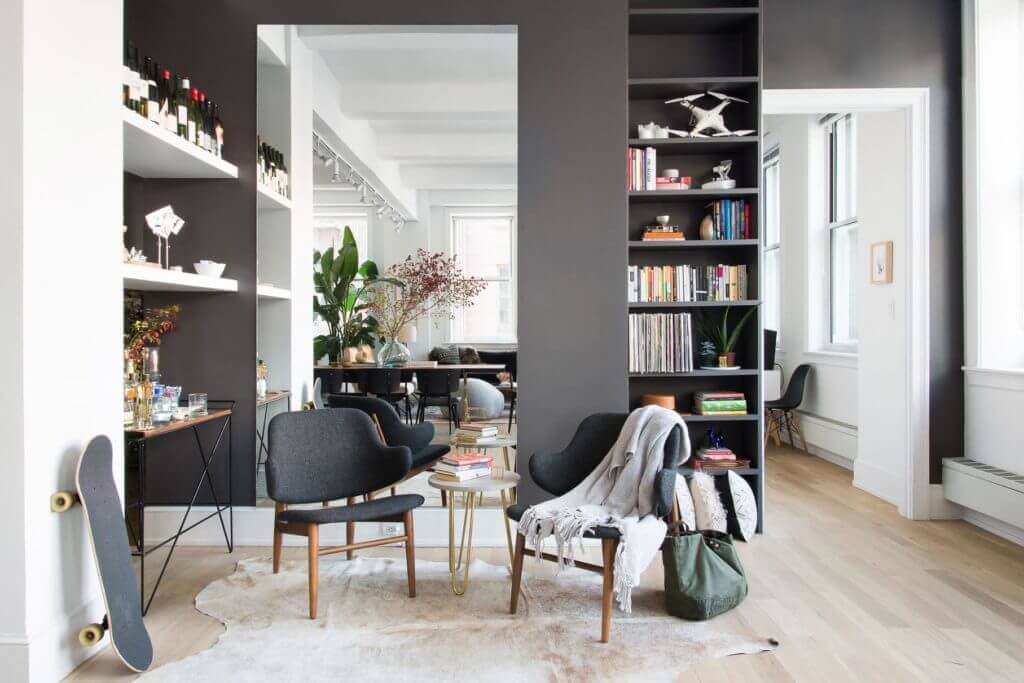
The above photo from Homepolish is a great example of what you should be considering when painting accent walls. The open floor plan is broken up to make the space more intimate with an accent wall that differentiates the “living” and “dining” rooms while still maintaining the flow of the interior. Even the shelves are painted, seamlessly connecting with the rest of the accent wall.
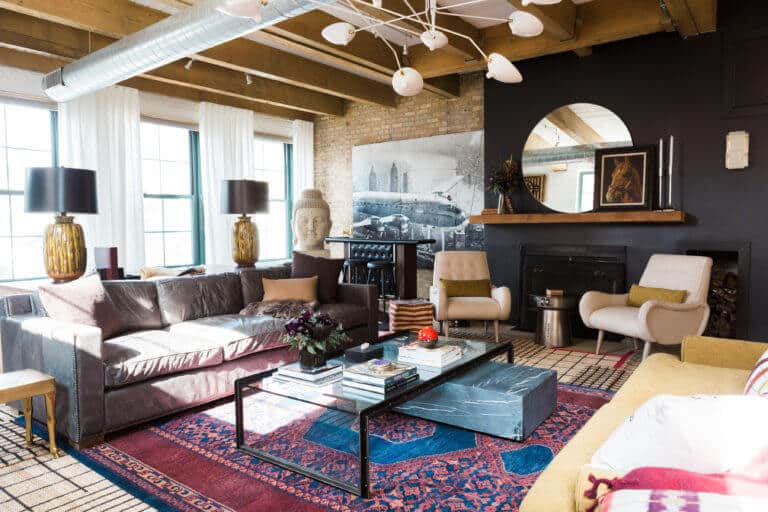
This living room loft below from Anthony Michael Interior Design is open but draws the eye to a center focal point, thanks to the bold accent wall. This is also a great example of using an accent wall to contrast with a different wall texture. The smooth paint and the rough brick add interest and depth.
How to Choose an Accent Wall Color
The primary rule for accent walls is that the color should be noticeably different from the surrounding walls while still belonging to the same overall palette. It should be bold enough to stand out, but not so different it feels disconnected from the rest of the room. A single accent wall should draw the eye, not compete with everything else in the space.
As with any painting project, it’s also important to consider the lighting. Lighting can change the look of a color, so be sure to test out your chosen hue in different lighting situations before committing. Here are some other factors to consider:
DO: Use an accent wall as the knot that ties all the color threads together. You may have different colors upstairs and downstairs and from room to room, but an accent wall has the awesome power to bring them all together. Consider using a color wheel to choose a coordinating color.
Of course, just because you want the accent wall to be your “knot” doesn’t mean you can’t have fun. Go bold! Use a color that would be overwhelming in the whole space (but is still within the color palette of your other paint colors).
DON’T: Never pick a dark color in a dark space – even with just an accent wall. It will make the space heavy.
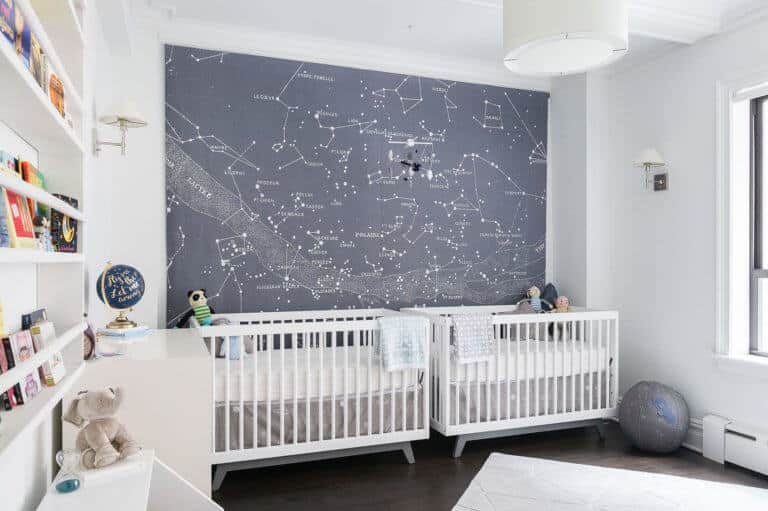
DO: An accent wall is a great space for wallpaper that would be gaudy if you used it over the entire space. Detailed wallpaper, like this one of the night sky in the nursery below, is perfect as a flourish in your house. Think of wallpaper-ed accent walls as artwork that pops from your color scheme but doesn’t conflict!
Should an Accent Wall Be Lighter or Darker Than Other Walls?
An accent wall tends to be most effective when it's darker or more saturated than the surrounding walls, and a deeper shade creates the contrast needed to define the wall as a deliberate focal point. Choosing a lighter color for an accent wall can work in some cases where the surrounding walls are darker, but in a large, open space it can fail to create the visual impact of a darker accent wall.
Match Your Fabrics to Your Accent Wall Color
Accent walls tie the paint colors together and connect the fabric to the wall, making the entire home seem uniform. It’s easiest to pick fabrics after painting the accent wall, but for a small home improvement project, accent wall colors can easily be used to highlight an already-existing color in your fabric.
Trusted paint company Sherwin-Williams even has color-matching technology to help pick up the exact color palette in your fabric. You can also explore our Color Visualizer Tools to get an idea of what could work for your space. And remember – you can always schedule a free color consultation with 360° Painting to help you master the color selection process before you start painting!

Observe how this room featured by Homepolish utilizes accent walls to highlight a color from the open floor plan, seamlessly integrating it from the wall to the cushions and rug for a cohesive look.
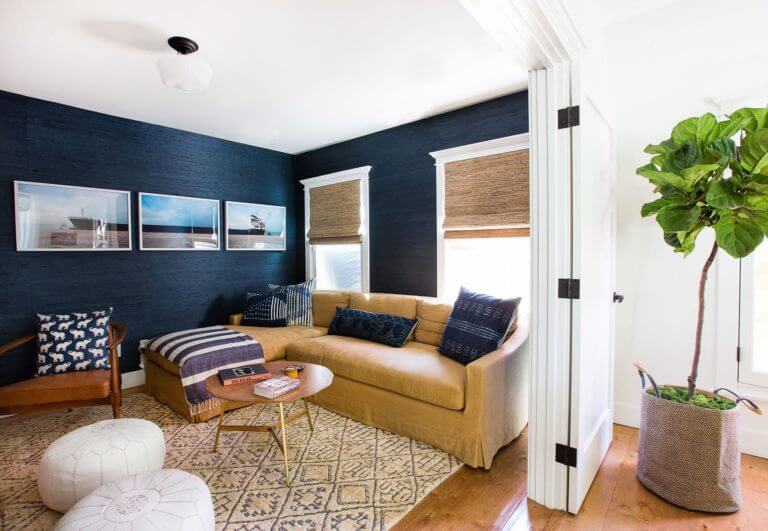
That’s a good use of an accent wall and fabric, showing how one can complement and enhance the other.
See It All Tied Together
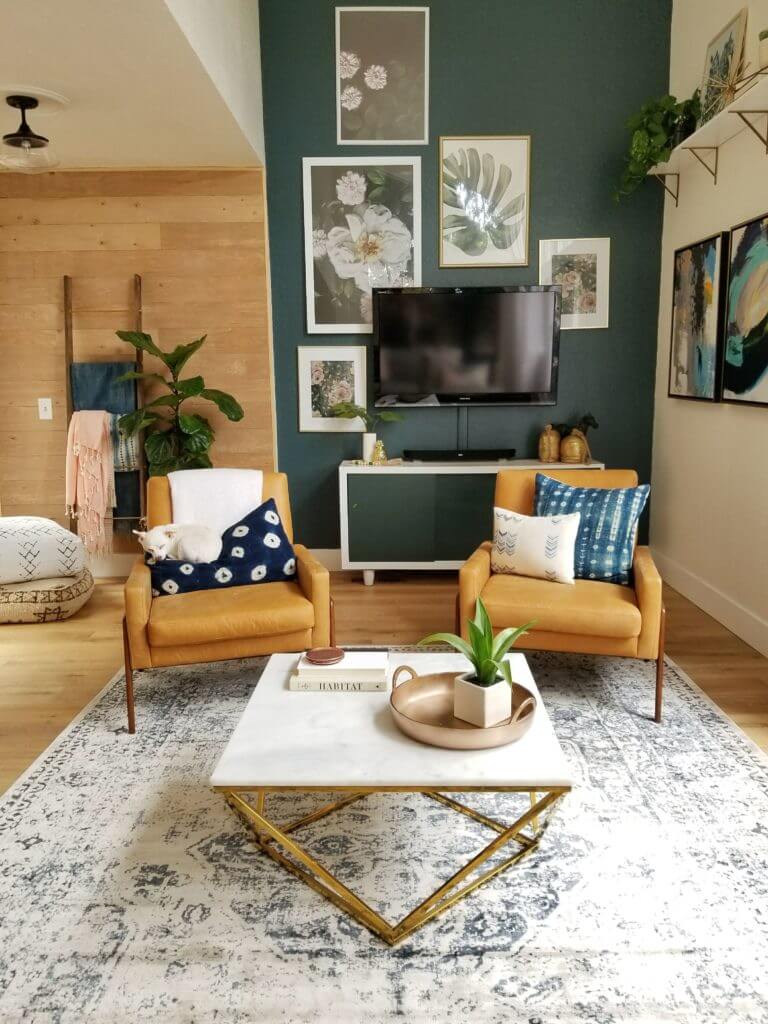
Once you consider all three tips (choosing the right wall, picking the perfect color, and incorporating fabric), you will have an accent wall that is bold yet ties everything together to make your home feel complete. This accent wall below, from the designer and lifestyle blogger of Kismet House, follows all our tips and makes the most of the existing colors in the fabrics.
Learn about all things painting, from choosing a finish for the paint on your accent wall to the benefits of hiring a professional painting contractor on our blog!
For a free color consultation and free estimate for your new accent wall, find your nearby 360° Painting today!